Krishnamurthy Manjunatha Invited by Republic Kannada Channel to Discuss Axiom-4 Mission Return from the International Space Station
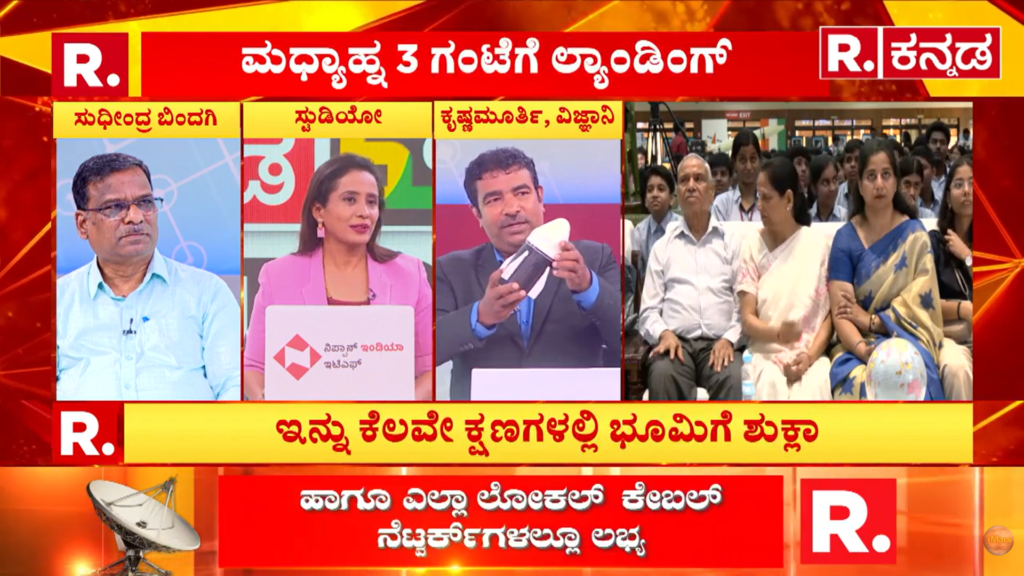
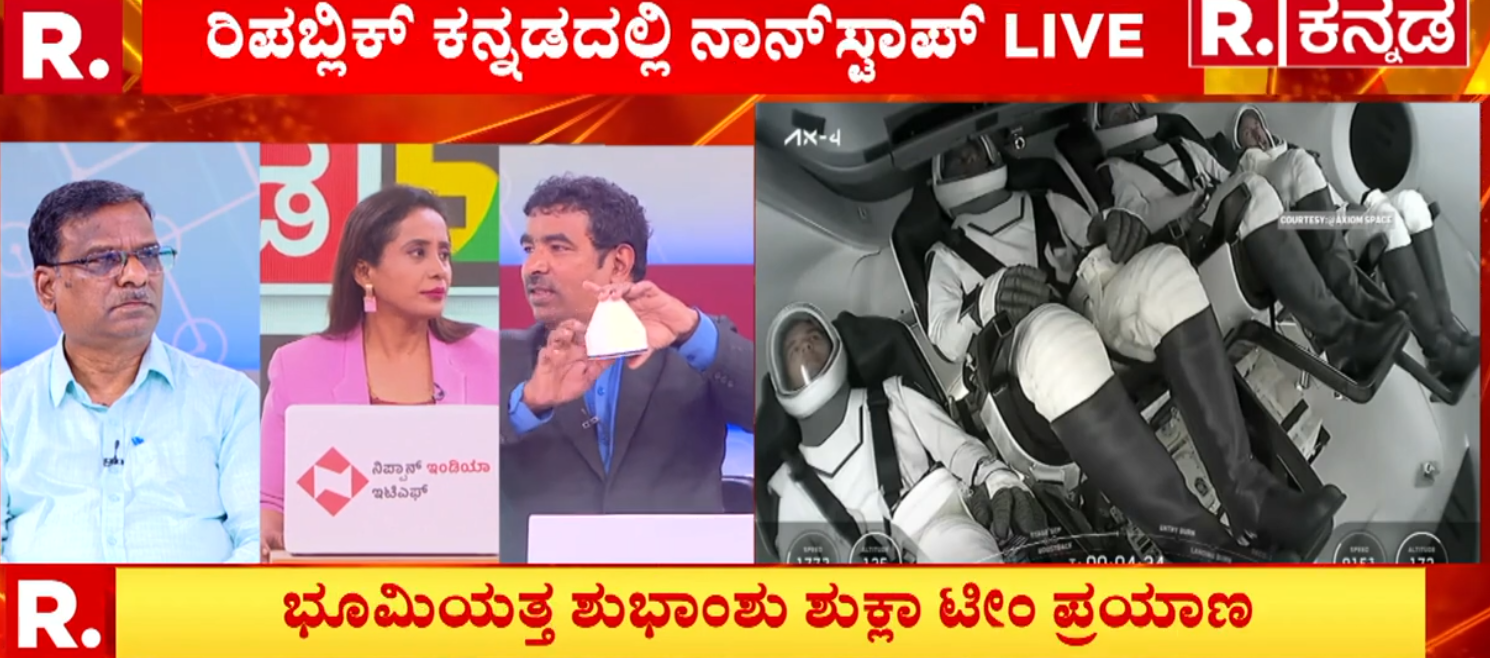
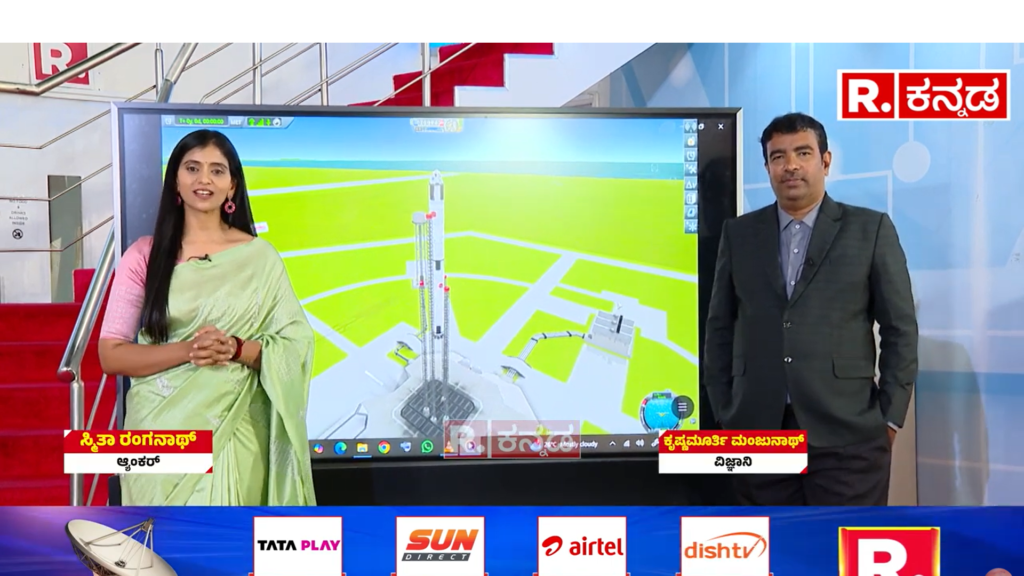
The successful return of astronauts from space is one of the most critical and technically demanding phases of any human space mission. When the Axiom-4 mission prepared for its return journey from the International Space Station to Earth, Krishnamurthy Manjunatha was invited by Republic Kannada for a special live discussion to explain the complete return process to the public. The event was live telecast on Republic Kannada, where viewers were given a detailed understanding of how astronauts safely travel back home from orbit.
During the discussion, Krishnamurthy Manjunatha explained the entire return journey step by step, beginning with the de-docking procedure of the SpaceX Dragon capsule from the International Space Station. He described how the spacecraft carefully separates from the station using a controlled sequence of commands, ensuring safe clearance before initiating its return trajectory. The de-docking process requires extreme precision, as even small errors in orbital movement can affect the re-entry path back to Earth.
He further explained how the Dragon capsule performs orbital maneuvers after separation, gradually lowering its orbit to begin atmospheric re-entry. This phase is one of the most dangerous parts of the mission because the spacecraft enters Earth’s atmosphere at extremely high speeds, generating intense heat due to friction. The heat shield plays a crucial role in protecting the crew capsule and astronauts during this high-temperature descent.
Krishnamurthy Manjunatha also discussed the re-entry method in detail, helping viewers understand how the spacecraft slows down and transitions from orbital velocity to a safe landing sequence. He explained the deployment of the drogue parachutes, which are first released to stabilize and slow the capsule during descent. Once the speed is sufficiently reduced and stability is achieved, the much larger main parachutes are deployed. These main parachutes significantly reduce the descent speed and prepare the capsule for a safe splashdown in the ocean.
The final phase of the mission—ocean recovery—was also explained in detail. After splashdown, specialized recovery teams and ships quickly reach the landing zone to secure the capsule, assist the astronauts, and transport both crew and spacecraft safely back to land. This carefully coordinated recovery process ensures astronaut safety after their long-duration mission in microgravity.
An especially significant aspect of this discussion was that Krishnamurthy Manjunatha himself holds a patent for the world’s fourth method of spacecraft re-entry to Earth. His expertise in re-entry systems provided viewers with a rare opportunity to hear technical explanations directly from a scientist actively involved in advanced re-entry research and innovation. His patented work reflects his contributions to the field of spacecraft recovery and safe return systems, making his analysis of the Axiom-4 return mission particularly valuable and insightful.
The Republic Kannada live discussion successfully transformed a highly complex aerospace operation into an understandable and engaging learning experience for the public. By explaining de-docking, orbital descent, re-entry heating, parachute deployment, and ocean recovery in simple terms, Krishnamurthy Manjunatha helped students, families, and space enthusiasts appreciate the incredible engineering behind human spaceflight.
This appearance once again highlights the importance of public space education and scientific outreach. Through such discussions, Krishnamurthy Manjunatha continues to inspire young minds and promote awareness of India’s growing role in global space exploration. His work through iMars Organization and public science communication reflects a larger mission—to make advanced space science understandable, accessible, and inspiring for the next generation of explorers.